Embroidery Floral Landscape: A Designer’s Review
As an embroidery designer who has spent years digitizing for small businesses, I know that the difference between a hobbyist project and a professional brand asset often comes down to the source imagery. When I first pulled up Embroidery Floral Landscape, my immediate goal was not just to admire the aesthetics, but to evaluate its viability for commercial application. For boutique owners, Etsy sellers, and apparel decorators, finding high-quality visual assets is only half the battle. The real challenge lies in translating those images into stitched reality without losing clarity or brand integrity.
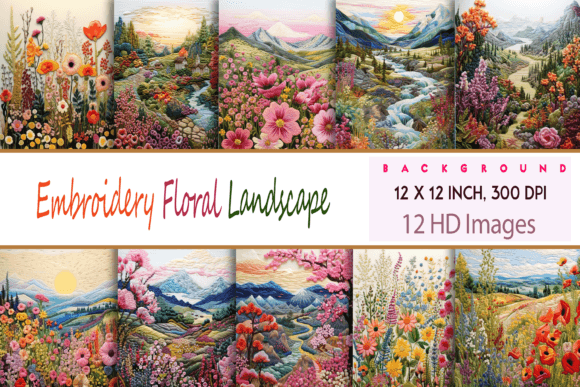
This review focuses on how this specific collection functions within the workflow of creating branded merchandise. We are looking at a set of 12 high-definition images presented in PNG format, with dimensions of 12” x 12” at 300 DPI resolution. These technical specifications are the foundation of any successful digitization project. Let us dive into how this asset performs when moved from a digital screen to a physical hoop.
First Impressions: Visual Personality and Brand Fit
The title Embroidery Floral Landscape suggests a blend of organic softness and structured scenery. Upon reviewing the 12 included images, the aesthetic leans heavily toward the elegant and decorative side of the spectrum. For a small business owner, understanding the "personality" of your design assets is crucial. This collection does not scream modern minimalism or bold industrial strength. Instead, it offers a rustic, handmade feel that aligns perfectly with brands rooted in nature, wellness, artisanal crafts, or boutique hospitality.
If you run a local florist shop, a bakery specializing in organic ingredients, or a creative studio offering handmade goods, this visual language speaks directly to your target audience. It feels premium yet approachable. However, if your brand identity is built on sharp, geometric lines or high-contrast corporate visuals, this floral landscape might feel too soft. Always ensure your design assets match your existing brand voice before committing to production.
Real-World Application for Small Business Merch
The true test of any graphic is its versatility. How does Embroidery Floral Landscape perform when applied to actual products? Here is where the 300 DPI resolution and 3600 px x 3600 px dimensions become critical. These high-resolution files provide enough detail for a digitizer to create clean, scalable paths.
- Embroidered Patches: This is perhaps the strongest use case. A 12-inch square image can be scaled down to a 3-inch or 4-inch patch without losing the essence of the floral elements. Patches are excellent for small business merch because they can be applied to various items post-production, reducing inventory risk.
- Apron Embroidery: For cafes and bakeries, staff uniforms are walking billboards. Placing a simplified version of this landscape on the chest pocket of an apron adds a touch of sophistication. It elevates the perceived value of the service and reinforces the brand identity.
- Tote Bag Design: Canvas totes are a staple for retail shops. The organic flow of a floral landscape works beautifully on textured fabric. It creates a handmade product feel that customers love to carry around, effectively turning them into brand ambassadors.
- Cap Embroidery: While possible, caps require careful handling. The curved surface distorts detailed images. I recommend using only the most prominent element of the landscape for cap fronts, rather than the entire scene, to maintain legibility.
For custom apparel and work shirts, this design serves as an excellent accent. It is not necessarily a full-back centerpiece but works wonders as a sleeve detail or a left-chest logo accompaniment. It adds visual interest without overwhelming the garment.
Navigating Technical Challenges in Digitization
While the source files are high quality, converting a complex Backgrounds or Graphics image into a machine embroidery design requires expertise. There are specific areas where Embroidery Floral Landscape demands caution.
First, consider stitch density. Floral landscapes often contain gradients and fine details. If you attempt to stitch every pixel, you will end up with a stiff, cardboard-like patch that may pucker the fabric. A skilled digitizer must simplify the image, reducing unnecessary detail while preserving the overall shape. This is why having a 300 DPI PNG is beneficial; it allows you to see exactly where details can be merged or removed.
Second, think about thread colors. The digital image may show subtle shifts in green or pink that are impossible to replicate with standard embroidery threads. You must map the digital colors to available thread charts. Contrast is key. If the background and foreground flowers are too similar in tone, the design will look muddy when stitched. Test your color palette on a printable mockup before running the machine.
Third, fabric texture matters. On smooth polyester, fine details hold up well. On rough canvas or terrycloth, small elements may get lost. Always test on the actual material you intend to sell. Use the appropriate stabilizer—cut-away for stretchy fabrics like t-shirts, and tear-away for stable wovens like tote bags—to prevent distortion.
Impact on Brand Identity and Customer Trust
Why go through the trouble of custom embroidery? Because it signals quality. In a market flooded with printed drop-shipped goods, an embroidered patch or direct-stitched design stands out. It tactilely engages the customer. When a client receives a tote bag or shirt with Embroidery Floral Landscape stitched onto it, they perceive higher value. This perception builds trust.
Consistency is also vital. If you use these graphics across your packaging, social media, and physical products, you create a cohesive visual world. This consistency aids in brand recognition. Customers begin to associate that specific floral style with your business. Whether it is a gift with purchase or a premium item for sale, the finished product reflects the care put into its creation.
Practical Notes for the Embroidery Professional
Before you launch your next commercial embroidery project using this collection, follow these steps to ensure success:
- Check Licensing: The product description mentions impeccable quality and file size details, but always confirm the commercial licensing terms. Ensure you have the right to use these digital embroidery file sources for goods you intend to sell.
- Test in Black and White: Convert the PNG to grayscale. If the design loses its definition without color, it relies too much on hue rather than shape. Good embroidery design must hold up in monochrome.
- Verify Hoop Size: Determine the maximum hoop size available on your machines. Scale the design to fit comfortably within the hoop, leaving room for stabilization.
- Create a Mockup: Use the 12” x 12” PNG to create a digital mockup on a photo of your actual product. Show this to clients for approval before stitching. It saves time and thread.
- Inspect Spacing: Look closely at the 3600 px image. Are there areas where elements are too close together? These may need to be widened in the digitizing software to prevent thread breaks or nesting.
In conclusion, Embroidery Floral Landscape is a robust resource for designers looking to add an organic, elegant touch to their portfolio. It is not just a pretty picture; it is a functional asset for building brand identity. By respecting the technical limitations of embroidery and leveraging the high resolution of the source files, you can create stunning, profitable merchandise. Whether you are outfitting a cafe staff or launching a new line of boutique totes, this design collection offers the versatility and quality needed to make a lasting impression. Always prioritize testing and proper digitization techniques to transform these graphics into tangible business success.