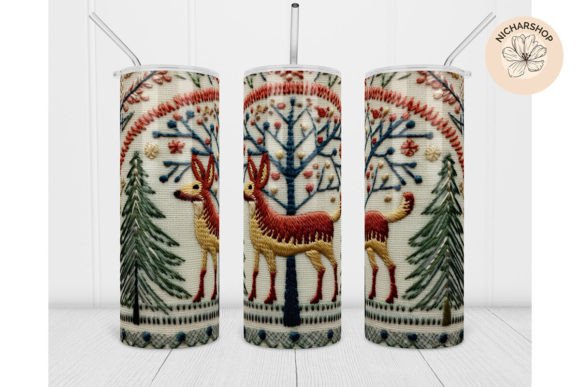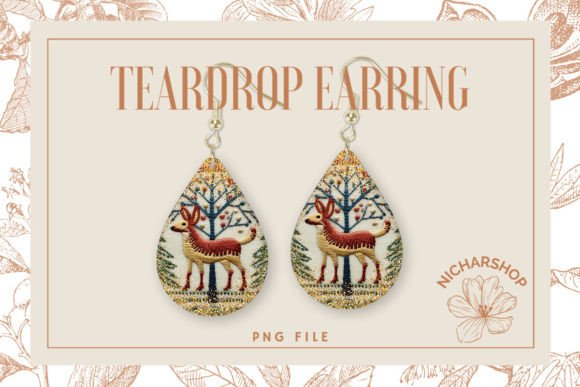
Reviewing the Christmas Deer Teardrop Design
As a designer who spends more time staring at stitch maps than actual fabric, I have learned that not every pretty picture translates into a quality machine embroidery design. When I first pulled up the Christmas Deer Embroidery Teardrop3 on my screen, my initial reaction was one of cautious optimism. The teardrop shape is a classic silhouette for holiday motifs, offering a contained, balanced look that fits well within standard hoop sizes. However, before I commit any thread to fabric, I need to know how this graphic holds up under the needle.
This review comes from the perspective of someone who has stitched thousands of items for clients, from high-end boutique apparel to quick-turnaround craft fair goods. I am evaluating Christmas Deer Embroidery Teardrop3 not just as a digital image, but as a potential component of a finished product that needs to survive washing, wearing, and customer scrutiny.
First Impressions and Visual Personality
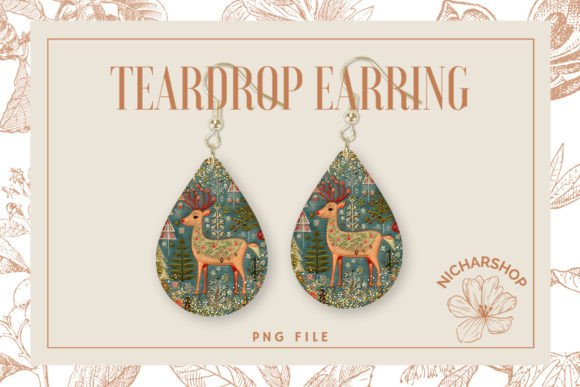
The mood of this design is undeniably festive yet restrained. It avoids the chaotic clutter that plagues so many holiday graphics, opting instead for a cleaner aesthetic. For an Etsy seller or small shop product creator, this is crucial. Customers are increasingly drawn to minimalist or moderately detailed designs that look professional rather than homemade in the negative sense. The deer motif, centered within the teardrop frame, suggests a traditional holiday warmth without feeling dated.
It is important to note that this product falls under the category of Print Templates and Graphics. Specifically, you are receiving high-resolution 300 DPI PNG files with a transparent background. This distinction matters immensely. This is not a native embroidery file like PES or DST. It is a graphic asset. This means you cannot simply load it onto your embroidery machine and hit start. You must either use it as a reference for manual digitizing or, more commonly, use it for printed transfers, sublimation, or as a base for creating your own digitized version if you have the skills. For those looking for a ready-to-stitch digital embroidery file, this requires an extra step of preparation.
Real-World Application: The Holiday Tote Scenario
To test the viability of this design, I imagined a common real-life scenario: producing a batch of canvas tote bags for a local holiday market. Canvas is a sturdy, textured fabric that can swallow fine details if the design isn't robust. If I were to use this PNG as a guide for an applique design, the teardrop shape provides a perfect boundary for cutting fabric pieces. I could layer a red felt background within the teardrop and stitch the deer silhouette on top using a satin stitch border.
Alternatively, if I were using this for direct printing onto a tote bag design or a cotton apron, the 300 DPI resolution ensures crisp edges. The transparent background is a significant advantage here, allowing me to place the design on dark navy or forest green fabrics without worrying about a white box surrounding the image. This flexibility is vital for custom apparel where brand colors or seasonal palettes vary.
Performance on Different Garments
When considering sweatshirt embroidery or fleece jackets, the visual weight of the design becomes a factor. A teardrop shape is vertically oriented, which works beautifully on the left chest of a hoodie or the center of a pillow cover. However, because this is a graphic file, you must consider how the image translates to stitch density if you plan to digitize it yourself. A dense fill stitch on a fuzzy fleece might cause puckering if not properly stabilized. Conversely, using it as a printed transfer on a sweatshirt avoids these texture issues entirely, making it a safer bet for beginners.
For baby embroidery projects, such as onesies or burp cloths, the simplicity of the deer is appealing. Parents often prefer softer, less aggressive imagery. However, you must be mindful of the size. If you shrink this design too much for a small baby item, the details of the deer’s antlers or the teardrop’s edge might blur, especially if printed. Always test a sample on scrap fabric to check for clarity.
Critical Considerations for Crafters
While the aesthetic is strong, there are practical limitations to address. Since this is a PNG and not a vector SVG or a native embroidery format, scaling can be tricky. Enlarging a raster image beyond its original dimensions can result in pixelation. If you are planning to create a large embroidered patch or a prominent back-piece for a jacket, ensure the 300 DPI resolution is sufficient for your intended print size. For smaller applications like caps or hats, the resolution should be ample, but the curved surface presents a challenge for alignment if you are using heat transfer vinyl or printed overlays based on this graphic.
Fabric texture also plays a role. On loosely woven linen or burlap, a printed design might bleed slightly into the fibers. On smooth cotton or polyester blends, the image will remain sharp. If you are using this as a reference for hand embroidery or machine stitching, pay attention to the thread colors you select. The monitor settings warning in the product description is accurate; colors on screen rarely match thread charts exactly. I recommend pulling physical thread samples against your fabric before committing to the final embroidery project.
Enhancing Product Value and Brand Consistency
Using a cohesive design like Christmas Deer Embroidery Teardrop3 can significantly boost the perceived value of your handmade product. Consistency in design elements helps build brand recognition. If you use this teardrop motif across various items—perhaps as a printed label on packaging, a watermark on your printable mockup images, and as the main graphic on your holiday embroidery collection—you create a unified look that customers trust.
For commercial embroidery professionals, this graphic serves as an excellent design asset for client proofs. You can quickly show a client how a deer motif might look on their merchandise without spending hours digitizing a custom file first. It speeds up the consultation process and helps secure approvals faster.
Practical Designer Notes
Before you integrate this design into your workflow, keep these technical tips in mind:
- Check Licensing: Confirm whether the license allows for commercial use of finished items. Some graphic licenses differ from embroidery file licenses.
- Test Print Quality: Print the PNG on your intended transfer paper or fabric at 100% scale to check for pixelation or color banding.
- Contrast is Key: Ensure your thread or ink color contrasts sufficiently with the fabric. A dark deer on a black shirt will vanish.
- Stabilizer Selection: If digitizing from this image, use a cut-away stabilizer for stretchy fabrics and a tear-away for stable wovens to prevent distortion.
- Hoop Size Alignment: Measure your hoop area against the aspect ratio of the teardrop to ensure it fits without resizing excessively.
In conclusion, Christmas Deer Embroidery Teardrop3 is a versatile graphic resource for the modern maker. It bridges the gap between digital design and tactile creation, offering a polished look for personalized gifts and craft business inventory. While it requires an understanding of the difference between a graphic template and a stitch file, its high resolution and transparent background make it a valuable addition to your library of design assets. Whether you are printing, sublimating, or using it as a reference for stitching, this design holds up well under professional scrutiny.